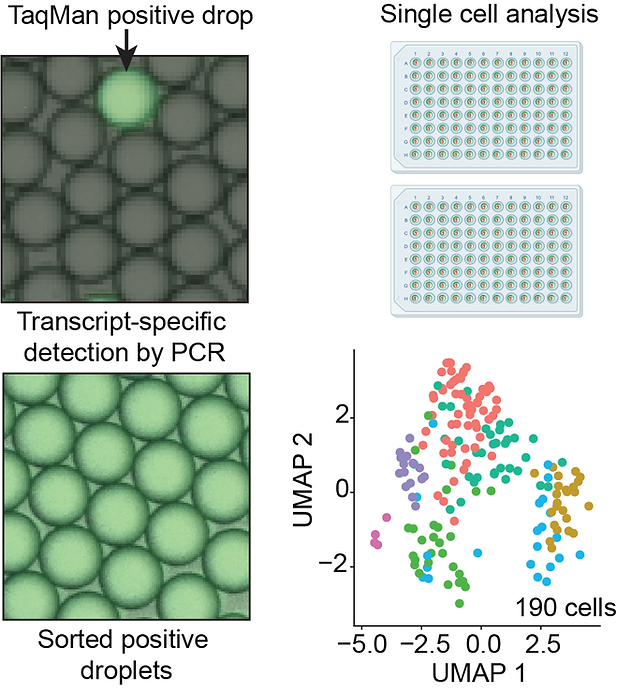
FIND-seq
Defining rare cellular partners
Biomarker-guided microfluidics help the lab isolate rare transcriptional or genetically defined cell states from complex tissues, turning sparse signals into testable biology.
 The Wheeler Lab
Neuroimmunology at BWH and Harvard Medical School
The Wheeler Lab studies how immune and nervous systems reciprocally shape behavior, inflammation, and disease. The lab builds tools across genomics, neuroscience, immunology, and computation to make those interactions visible.
Research focus
Biomarker-guided microfluidics help the lab isolate rare transcriptional or genetically defined cell states from complex tissues, turning sparse signals into testable biology.
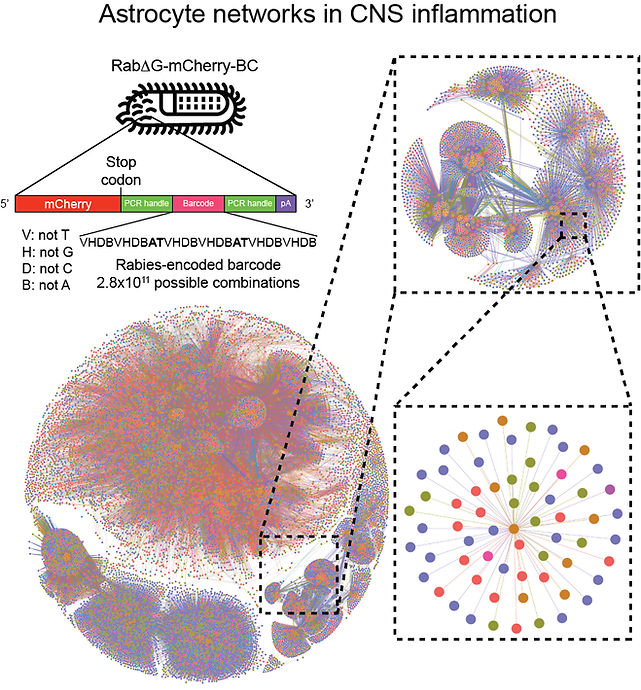
Barcoded tracing and perturbation strategies reveal transient cellular circuits in the central nervous system that would otherwise disappear in bulk assays.
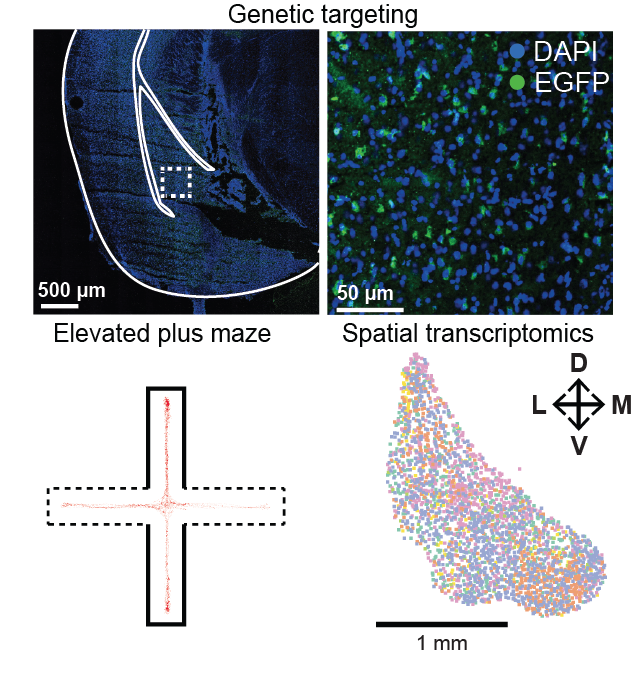
Genomics, spatial transcriptomics, imaging, deep learning, actuator technologies, and behavioral paradigms are combined to study immune control of neural function.
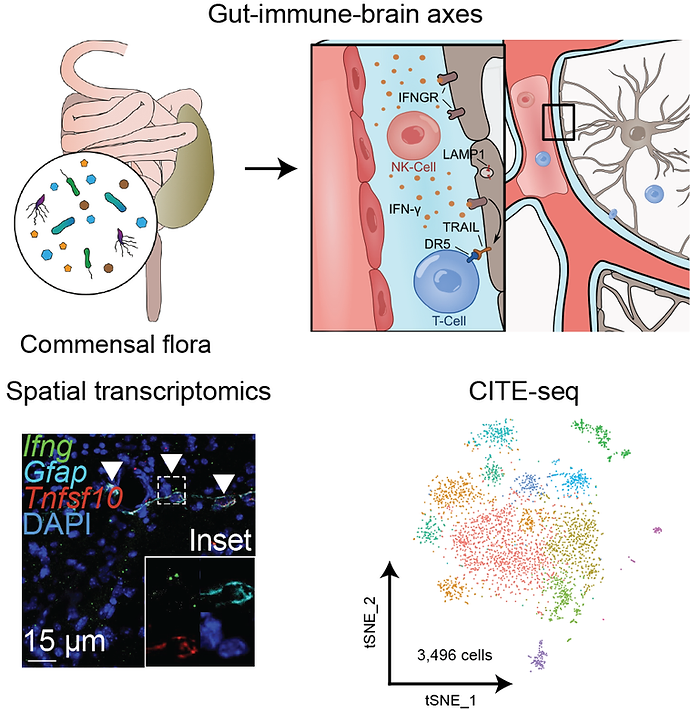
The lab studies how commensal flora, peripheral immune licensing, diet, pollutants, and stress tune astrocyte and CNS responses in health and disease.
Methods
The lab pairs experimental and computational methods so that disease-linked immune signals can be observed, perturbed, and connected back to behavior.
Support
 NIH NINDS
 NIMH
NIMH BWH
BWH Research foundations